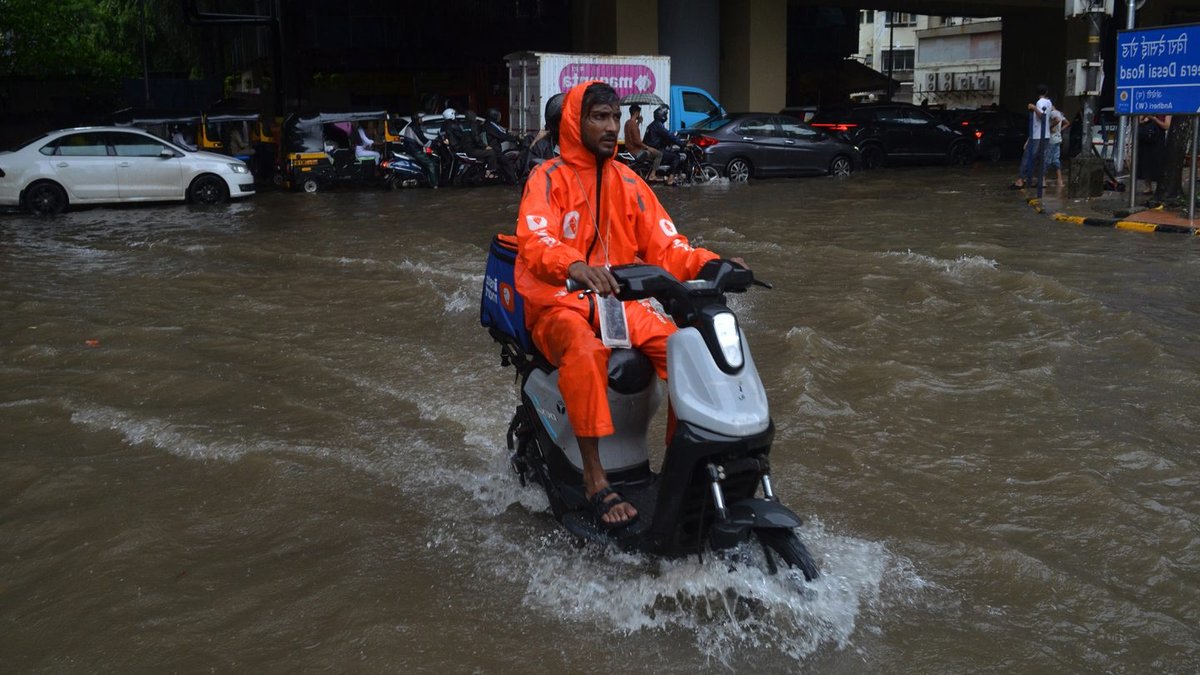
Can we train AI to choose safety over speed in extreme weather conditions? As July monsoon rains flood Mumbai’s streets, quick-commerce platforms are deploying advanced weather algorithms to capture surging demand. While tech companies capitalize on these storms, the workers handling knee-deep water are forced to choose between their livelihood and their safety. The question of whether algorithms can genuinely prioritize human well-being over efficiency is becoming increasingly urgent as climate volatility accelerates.
2026 marks the first year the India Meteorological Department has incorporated AI into weather forecasting, though delivery platforms have been feeding their systems weather-related data for longer. Zomato relies on crowd-sourced data from Weather Union, which it launched in 2024, and on driver partners logging conditions in real-time. “As soon as we’re alerted of unsafe conditions in any zone or store, we immediately alert delivery partners for their safety,” a spokesperson for Eternal, Zomato’s parent company, told Rest of World.
Related: China reshapes AI race with free Kimi model
Platforms do typically issue weather warnings and safety advisories, but the decision to work ultimately rests with workers themselves. Prakriti Dasgupta, assistant professor of human resources management at Ireland’s Maynooth University, explained that economic pressures and incentive structures often compel them to continue working under conditions that may jeopardize their health. Workers around the world brave heatwaves and snowstorms to protect their earnings. Between April and July 2026, Good Business Lab followed 730 delivery workers in and around India’s capital and found that most of them worked through extreme heat because their earnings depended on achieving performance targets.
Growing climate change issues and the limits of delivery worker endurance are on a collision course. Researchers who conducted a study during extreme rainfall in Guangzhou warn that the current trajectory is unsustainable. A separate 2024 study of a Chinese delivery platform during a heatwave found orders went up but earnings went down because of delays. In 2025, food delivery platform Glovo proposed a 2% to 8% heat bonus in Italy, which drew significant ire for incentivizing drivers to take risks and was ultimately scrapped. In the U.S., DoorDash charges customers a temporary “Weather Impact Fee,” which, according to the company, goes entirely to the worker in addition to their base pay and tips. Many platforms don’t explicitly advertise bad weather payouts, but dynamic pricing has similar outcomes.
Related: NVIDIA Secretly Buys Massive US Dark Fiber Network
Systemic flaws in the algorithm
Nitesh Kumar Das, organizing secretary of India’s Gig Workers Association, told Rest of World that weather is factored into demand forecasting and pricing, but not adequately into workload or safety. “During heavy rains, platforms introduce surge pricing or ‘rain incentives.’ However, the same intelligence does not appear to translate into meaningful reductions in delivery pressure or adjustments in expected timelines.” He added that areas experiencing severe flooding or official weather warnings should automatically be made temporarily unserviceable, “just as airlines suspend flights or municipalities halt public transport under hazardous conditions.”
Antonio Aloisi, a labor law professor at IE University Law School in Madrid, told Rest of World that Mumbai’s monsoon chaos is a window into the future of work everywhere. “With climate volatility accelerating, extreme conditions will soon be the norm in Europe too.” He emphasized that this is precisely why the regulatory conversation cannot be postponed or outsourced to the platforms’ goodwill: the systems we design now — thresholds, compensation schemes, stop mechanisms, remuneration models — will determine whether algorithmic management amplifies climate risk for workers or helps absorb it.