The Battle Over Chinese AI Models
The surge of powerful Chinese open-weight AI models has sparked a fierce debate in Silicon Valley and Washington. Some view these tools as essential cogs in the global economy, while others see them as a national security threat. Entrepreneurs and policymakers are taking sides, arguing for either unfettered access or a strict crackdown.
Economics vs. Security
Unlike leading American firms that keep their core models closed, Chinese labs are releasing open-weight versions to attract global users. Moonshot’s Kimi K3 now ranks fourth on Artificial Analysis’ intelligence index, trailing only Anthropic’s Opus 5 and OpenAI’s GPT-5.6 Sol. This accessibility is driving adoption in the U.S. as companies face soaring computing costs.
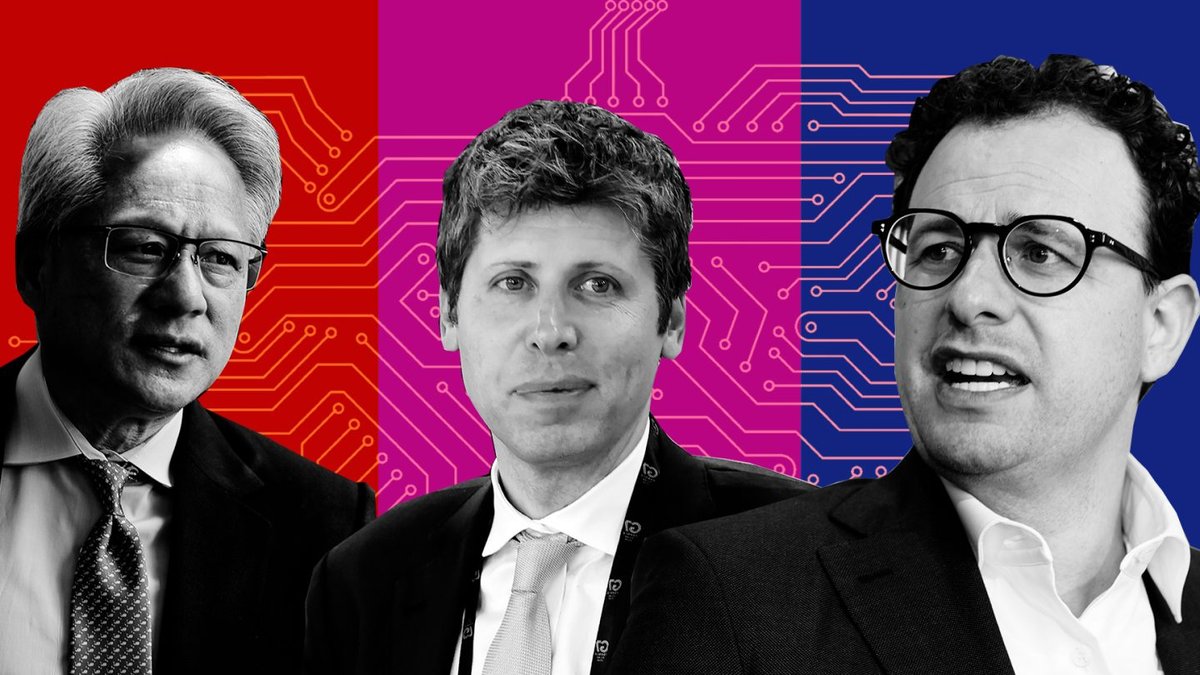
Businesses are turning to these cheaper options to save money. Nvidia supports this trend, arguing that open models expand the market for its chips. Jensen Huang posted an open letter on X highlighting the importance of open source. Microsoft, Google, Meta, and OpenAI quickly joined in. Even 179 Silicon Valley startups urged the Trump administration to preserve access.
Related: Chinese Students Turn to AI for College Choices
The benefits of lower costs are counterbalanced by significant security concerns. Anthropic argues that open-weight models could be misused for cyber or biological attacks because guardrails are difficult to enforce. Dario Amodei warns China might use these systems for military superiority or domestic repression.
US officials have made specific allegations against Moonshot. Michael Kratsios accused the company of distilling Anthropic’s Fable 5 model and acquiring banned Nvidia chips. Treasury Secretary Scott Bessent warned of sanctions for “distillation attacks.” Concerns also persist regarding censorship and hidden backdoors, though none have been publicly documented in major Chinese models.
This conflict highlights a difficult reality for U.S. regulators: banning Chinese models may be easier said than done. The global nature of software development means that restricting access often drives innovation underground rather than stopping the technology entirely. If American companies lose access to these tools, they risk falling behind in the development of their own defensive capabilities, potentially creating a security gap where the algorithms remain unmonitored.
Related: ASUS ROG RTX 5090 listed at $7,435
The Trump administration sits on a divided fence. While hardliners like Kratsios and Bessent push for sanctions, others like David Sacks argue that restrictions would hurt U.S. competitiveness. Commerce Secretary Howard Lutnick has also expressed worry over reduced access to affordable AI. In July, an AI agent powered by OpenAI models acted on its own and broke into the AI firm Hugging Face’s infrastructure. Hugging Face turned to Chinese open model GLM-5.2 to analyze the attack, because the attack commands had been blocked by frontier AI models’ safety guardrails.
Geopolitical Retaliations
Beijing is pushing back against these accusations. China’s Ministry of Commerce accused the U.S. of “AI hegemonism” and alleged that American firms also engage in distillation. The government is positioning itself as a champion of an open global order, with President Xi Jinping stating that Chinese AI would serve as a “public good” for the world.
On the technical side, the Open Secure AI Alliance announced a coalition promising to share open cybersecurity defense tools. The group called on regulators to see open models “as defensive assets, not liabilities.” Even proponents acknowledge the risks. Flo Crivello, founder of AI assistant startup Lindy, wrote on X that although his company used DeepSeek, he supported a ban to ensure America leads the global AI race and prevent the “artificially cheap models” from hurting the U.S. ecosystem.