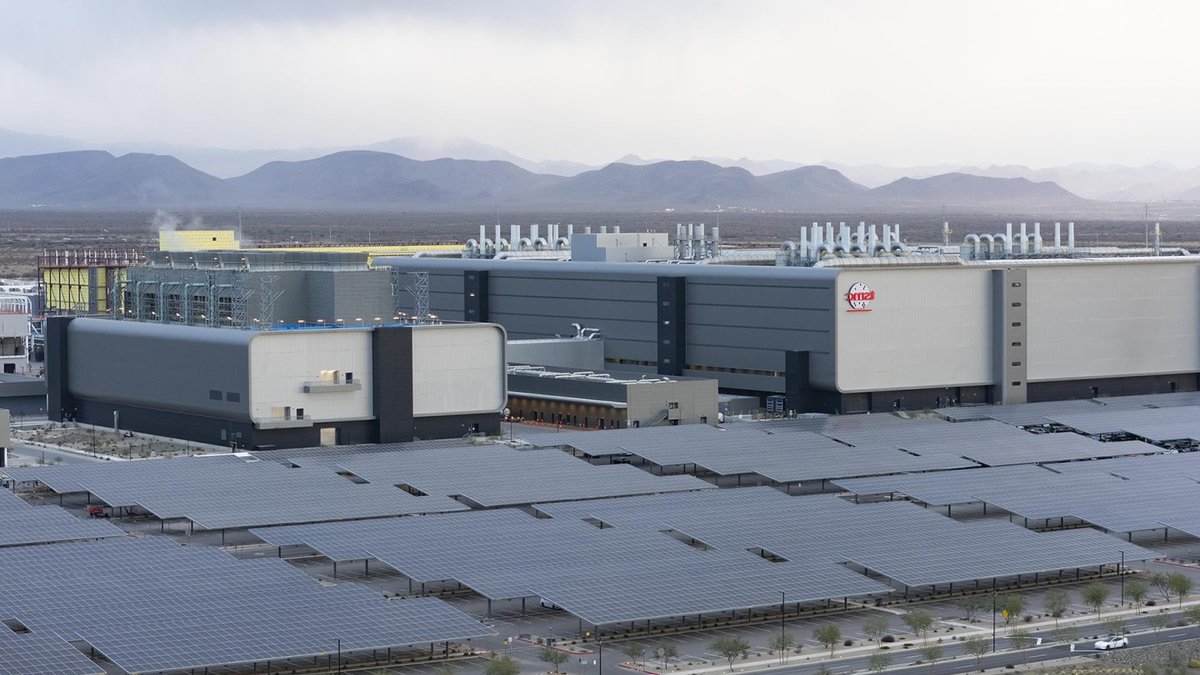
Arizona is positioning itself to Taiwanese investors as more than a semiconductor hub. During a July conference in Taipei, state officials encouraged property developers, family offices, and hospitality firms to take advantage of the real estate opportunities linked to the state’s expanding chip industry.
The “TSMC effect” reshapes Arizona’s economy
Steve Hsu, who heads the Arizona Commerce Authority’s Taiwan office, addressed a full audience in Taipei. Phoenix is undergoing a construction wave expected to continue for years. “There are ribbon-cutting ceremonies almost every week,” he noted. “Everywhere you look, something is being built.”
The driving force behind this growth is Taiwan Semiconductor Manufacturing Company (TSMC). The company revealed plans in 2020 to construct fabrication plants in Arizona. That initiative has since become the largest single foreign investment in U.S. history, with TSMC now committing $265 billion across 12 facilities in the state. At least 25 Taiwanese suppliers have relocated to support their largest client.
Yet Arizona’s economic expansion extends beyond semiconductors. Hsu described the state’s development as a chance for investors outside technology. “If only tech companies are building there while we ignore the appreciation in land values, we’ll miss a once-in-a-lifetime opportunity,” he warned.
Beyond semiconductors: a push for broader investment
Arizona is seeking Taiwanese capital for warehouses, logistics centers, hotels, and commercial real estate. These projects are necessary to sustain the growing supply chain. Trade between the state and Taiwan has risen sharply, increasing from $4.9 billion in 2024 to $21.2 billion in 2025. Last year, Taiwan became Arizona’s second-largest trading partner by volume and its top partner by value, overtaking Canada and China.
Related: Google Play Services adds Express Pay refreshes Shorts
Not every investor shares the same enthusiasm. During a conference break, some attendees expressed concerns about the required investment size. A Taiwanese real estate firm’s chief financial officer said her company was likely too small to take part. She had a personal interest in the state’s future, though—her son attends school in Arizona, and she wanted to explore potential opportunities for him if he remained there.
Others showed more confidence. Several venture capital and family office representatives indicated they would join upcoming investment trips to Arizona. The state’s appeal as a gateway to the U.S. market struck a chord, though regulatory and tax challenges of cross-border investment remained a worry.
Arizona faces the task of meeting the semiconductor industry’s immediate demands while also planning for long-term economic variety. State leaders recognize TSMC’s presence as a major attraction but are counting on the surrounding real estate and infrastructure opportunities to endure beyond any single company’s plans.
Hsu made the state’s position clear: the chance to invest in Arizona’s growth isn’t limited to tech firms. It’s available to anyone ready to support the state’s transformation. As digital communication tools defy internet shutdowns, investors can stay connected even in uncertain conditions.