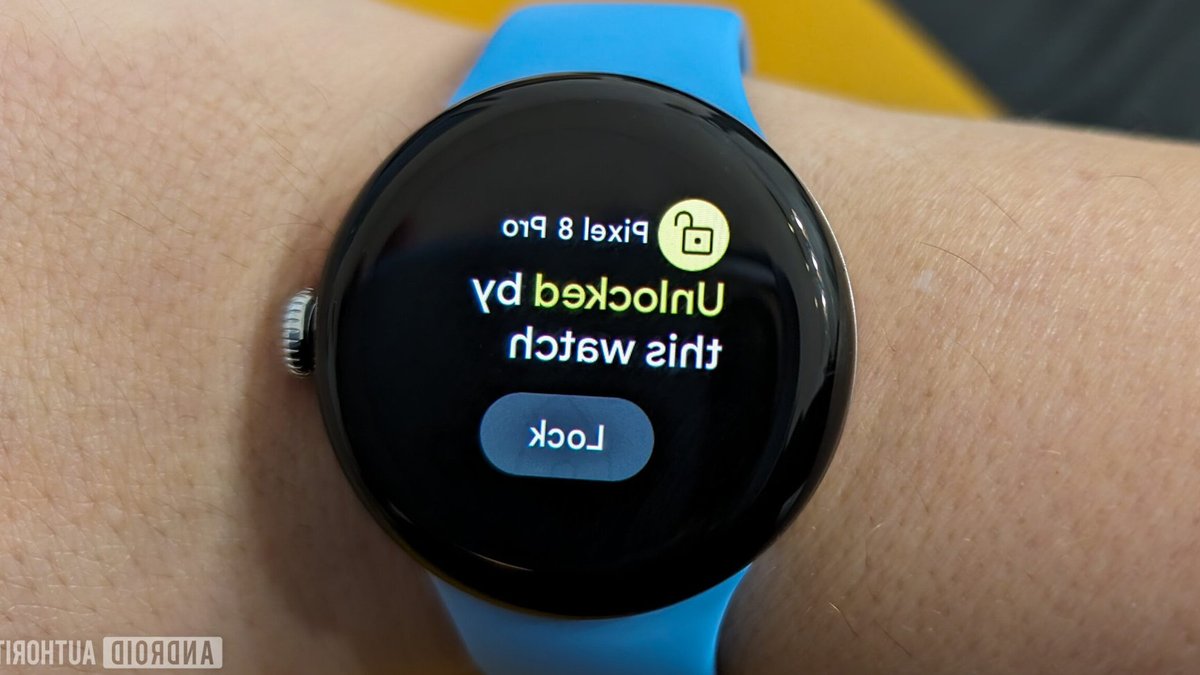
Google is developing a new feature that could reverse how Pixel Watch owners unlock their devices. Instead of using the watch to unlock a paired phone, the phone would automatically unlock the watch. This shift in functionality reflects Google’s ongoing efforts to streamline interactions between its Pixel ecosystem devices, reducing friction for users who frequently switch between them.
How the feature would work
The change was spotted in code strings within Google’s Connected Phone & Watch services app, which already powers Pixel-exclusive features like Left Behind notifications and Lock phone when left behind. The new Phone to Watch Unlock would let users skip entering a PIN or pattern on their watch by simply unlocking their paired Pixel phone. The underlying mechanism appears to rely on Bluetooth or ultra-wideband (UWB) technology to detect proximity and authenticate the devices in real time, ensuring the watch remains locked when the phone is not nearby.
Promotional notifications in the code suggest Google plans to actively push the feature to users. Examples include: “Unlocking your watch just got easier” and “Automatically unlock your watch?” These messages indicate that Google intends to highlight the feature’s convenience, likely through pop-up prompts or in-app banners within the Pixel ecosystem. Once enabled, the watch would display status messages like “Unlocking your watch” and “Watch unlocked” after the phone is authenticated, providing visual feedback to confirm the process has completed successfully.
Setup appears to require a one-time verification. Users would need to enter their watch’s current PIN or pattern before the phone can unlock it automatically, ensuring that the feature cannot be enabled without explicit user consent. This step acts as a security measure, preventing unauthorized access if the phone is compromised. The feature may also support transferring the trusted relationship to a new Pixel Watch without reconfiguring the entire setup, which would be particularly useful for users upgrading to a newer model. The code string referencing this capability suggests that the authentication token or pairing data could be migrated seamlessly, avoiding the need to repeat the initial verification process.
Why it matters for Pixel owners
For anyone who frequently removes their watch—even briefly—this could eliminate the hassle of re-entering a PIN multiple times a day. The tiny display on most smartwatches makes typing a code frustrating, especially in a hurry, as the limited screen real estate forces users to handle a small keypad or trace a pattern with precision. If the phone is already unlocked, the watch would follow suit, treating the phone’s authentication as proof of the user’s presence. This approach leverages the fact that most users unlock their phones far more frequently than their watches, making the phone a more reliable trigger for authentication.
The feature would only work with Pixel devices, as the Connected Phone & Watch services app is exclusive to Google’s ecosystem. That means users with non-Pixel phones or other Wear OS watches won’t have access to it, at least for now. The exclusivity shows Google’s strategy of creating tighter integration between its hardware products, encouraging users to remain within the Pixel ecosystem. While Wear OS is an open platform, Google appears to be reserving certain conveniences for its own devices, similar to how Apple restricts some features to iPhones and Apple Watches.
Related: Fold 8 Ultra fixes Galaxy Z Fold complaint
There’s no official timeline for when the feature might launch. The code was discovered during an APK teardown, a method used to predict upcoming features based on work-in-progress software. While such findings often signal future releases, Google hasn’t confirmed whether or when it will roll out Phone to Watch Unlock. The company has a history of testing features internally before deciding whether to release them publicly, and some experimental functionalities never make it beyond the beta stage. However, the inclusion of promotional strings and detailed setup instructions suggests that Google is far enough along in development to consider a public launch.
If it does arrive, the change would mirror how Watch Unlock currently works—but in reverse. Today, Pixel Watches can help unlock paired phones by serving as a trusted device, eliminating the need to enter a PIN or password on the phone when the watch is nearby. The new feature would flip that relationship, making the phone the key to the watch instead. This bidirectional unlocking system could create a more cohesive user experience, where devices within the Pixel ecosystem authenticate each other based on proximity and prior verification, reducing the need for manual input across multiple devices.
The potential benefits extend beyond convenience. For users who wear their watches intermittently—such as during workouts or while sleeping—the feature could reduce wear on the watch’s touchscreen, as repeated PIN entries can contribute to screen degradation over time. Additionally, it may improve security by discouraging users from disabling their watch’s lock screen entirely, a common workaround for those frustrated by frequent authentication prompts. By making the unlock process effortless, Google could encourage more users to keep their devices secured while still maintaining quick access.
Another consideration is how the feature might interact with other Pixel-exclusive functionalities. For example, Lock phone when left behind already uses the watch’s proximity to determine whether the phone should remain unlocked or lock itself automatically. If Phone to Watch Unlock is implemented, it could create a more seamless transition between these states, ensuring that both devices remain in sync without requiring manual intervention. The integration could also extend to other Pixel features, such as Find My Device, where the watch’s unlocked status might influence how alerts or tracking are managed.
Despite the potential advantages, there are also limitations to consider. The feature’s reliance on Bluetooth or UWB means that it may not function if the phone and watch are separated by distance or obstacles, such as walls or interference from other devices. Users who frequently leave their phones in one location while wearing their watches elsewhere might find the feature less reliable. Additionally, the one-time verification process, while necessary for security, could be seen as an extra step for users who prefer minimal setup. However, given that the feature is optional, those who find it unnecessary can simply choose not to enable it.
The discovery of this feature also raises questions about Google’s broader plans for Wear OS and its Pixel devices. If Phone to Watch Unlock proves successful, it could pave the way for similar integrations, such as using a Pixel phone to authenticate other Wear OS devices or even Pixel tablets. The company has already demonstrated a willingness to experiment with cross-device functionality, and this feature could be a stepping stone toward a more unified ecosystem where devices recognize and adapt to each other’s states automatically.