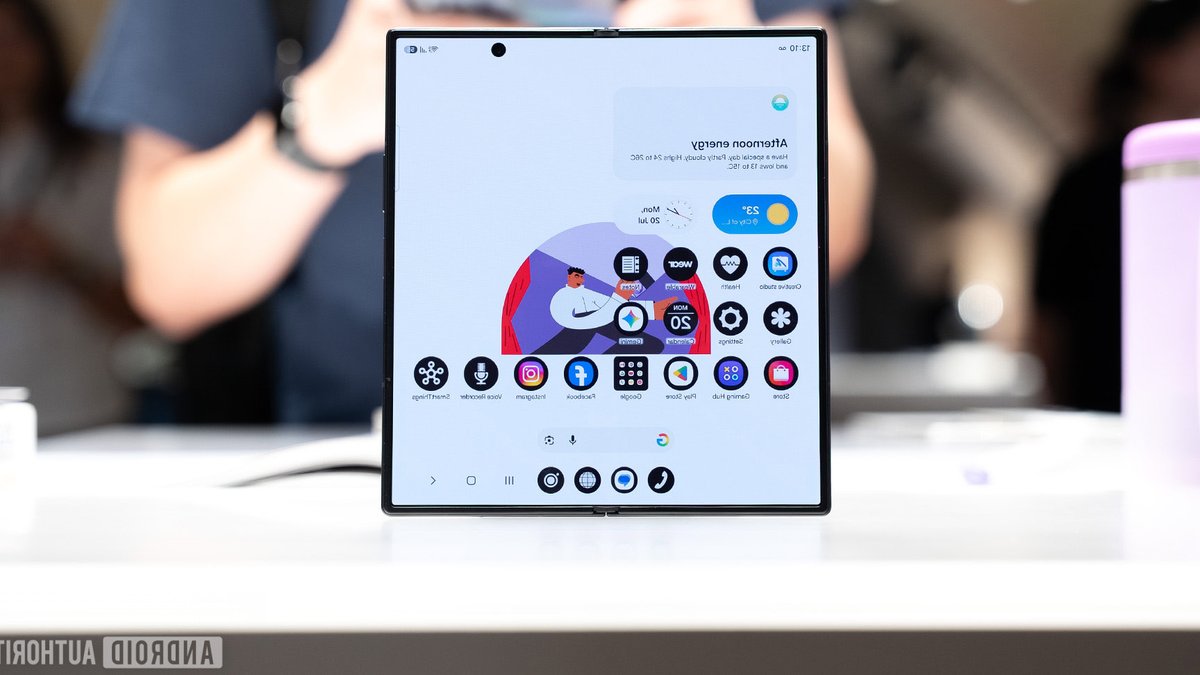
Samsung’s latest foldable, the Galaxy Z Fold 8 Ultra, addresses a usability complaint that lingered with the previous generation, the Galaxy Z Fold 7, by redesigning its side rails to make opening the device less cumbersome.
Thin design created a new problem
The Galaxy Z Fold 7 was praised for its 8.9 mm thickness when unfolded, a notable reduction from the 12.1 mm bulk of the Galaxy Z Fold 6. That slim profile made the phone feel more like a conventional smartphone, even in its folded state. However, the same thinness also meant the side rails shrank to roughly 4.2 mm, leaving users with less surface to grip. Reviewers reported needing precise thumb placement and, at times, resorting to wedging a fingernail into the crease to unfold the device.
Related: Samsung to add 8th flagship to Galaxy Z TriFold lineup
Such a habit raises concerns because the protective layer over the inner display—Samsung’s “Ultra Thin Glass”—is still a plastic cover. Accidental pressure from a nail could, in theory, damage the screen. The difficulty of opening the Fold 7 became apparent only after extended daily use.
How the Fold 8 Ultra changes the mechanics
Samsung’s response is the Galaxy Z Fold 8 Ultra, which retains the sub‑9 mm unfolded thickness while introducing a redesigned chassis. The new side rails feature a subtle chamfer and an aluminum frame that is marginally smaller, creating an opening gap about 20 % wider than that of the earlier model. This extra clearance allows users to grasp the device without relying on fingernails, reducing the risk of damage to the delicate inner screen.
Samsung states the wider gap results from a slightly shrunken aluminum chassis and a more aggressive chamfer, while the raised protective bezel remains largely unchanged. Because the company does not include the bezel in its official unfolded dimensions, the Fold 8 Ultra measures 0.1 mm thinner when opened, yet its folded thickness stays the same as its predecessor.
Related: New Wolverine game takes brutal dark turn
The hinge has been optimized for smoother operation, and the broader gap should give enough room for a thumb to pry the device open comfortably. This mechanical tweak is not listed on the spec sheet, but it may represent the most tangible improvement for everyday users.
From a broader perspective, the shift shows how small hardware adjustments can have outsized effects on user experience.