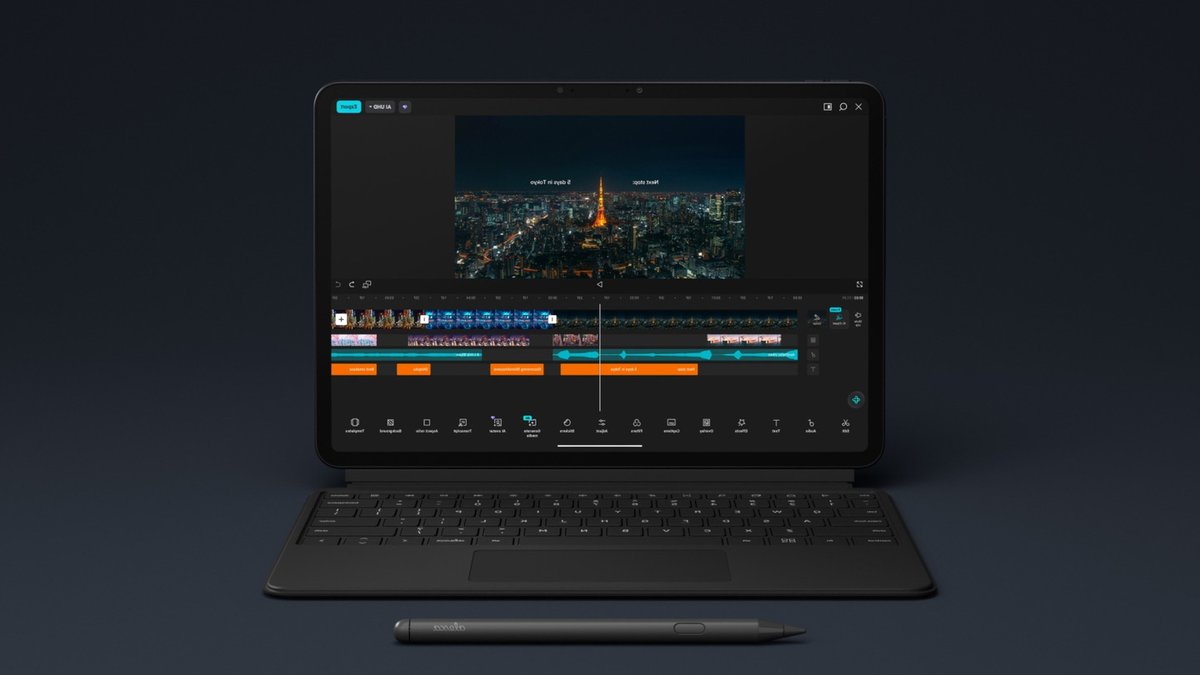
Amazon’s Alexa Tablet 12 Pro represents the company’s most direct challenge yet to Apple’s tablet dominance. While Amazon has long lagged behind the iPad Pro in both hardware performance and software polish, the new device closes one critical gap: affordability. The Alexa Tablet 12 Pro begins at $550—a steep discount compared to the iPad Pro. Whether that price advantage translates into a superior experience depends entirely on user needs and priorities.
The tablet adopts Apple’s design language in key ways. Beyond those superficial similarities, however, the two devices diverge sharply. The iPad Pro uses Apple’s M-series chip for near-laptop performance, while the Alexa Tablet 12 Pro runs on MediaTek’s Dimensity 8400, a smartphone-grade processor originally designed for mobile devices rather than tablets.
This hardware choice carries significant implications. The Dimensity 8400 handles everyday tasks—web browsing, streaming, and light productivity—adequately, but it cannot match the iPad Pro’s power for demanding workloads like video editing or AI-driven applications. Where the 13-inch iPad Pro starts with 12GB of RAM, the Alexa Tablet 12 Pro’s top-tier model offers just 16GB across its 256GB storage configuration.
Amazon’s strongest selling point lies in its display. The Alexa Tablet 12 Pro features a 120Hz LCD panel with 2,800 x 1,840 resolution and 500 nits of brightness. While this exceeds the iPad Pro’s pixel density at 264ppi, despite its OLED technology, the Apple device still delivers superior contrast and 1,000 nits of peak brightness. The trade-off for those premium display features comes at a cost: the iPad Pro’s matte finish requires spending at least $1,799 for the 11-inch model or $2,099 for the 13-inch version. The Alexa Tablet 12 Pro, by contrast, includes Amazon’s Nanomatte glass as standard equipment for just $550.
Why Amazon’s ecosystem wins for loyal users
For users already embedded in Amazon’s ecosystem, the Alexa Tablet 12 Pro introduces exclusive advantages. The device integrates deeply with Alexa+, offering personalized recommendations across Amazon’s services, including Kindle and Prime Video. A dedicated Kindle mode adjusts screen colors and dims notifications to optimize reading. While Siri on the iPad Pro has improved, Alexa+ maintains a tighter connection to Amazon’s smart home devices, such as Ring cameras and smart plugs.
The central question is no longer whether the Alexa Tablet 12 Pro can compete with the iPad Pro, it cannot, but whether its combination of price and niche features justifies switching for certain users. Casual consumers or budget-conscious buyers may find the answer affirmative, while professionals and creatives will likely remain loyal to the iPad Pro’s superior performance and software ecosystem.
Accessories represent another stark contrast between the two devices. Apple’s bundled offering for the 13-inch iPad Pro, including the tablet, Apple Pencil Pro, and Magic Keyboard, retails for $2,199 for the 1TB model. Amazon’s bundle, featuring the Alexa Tablet 12 Pro, a compatible keyboard, and stylus, costs $650. This price differential alone could reshape perceptions of what constitutes a premium tablet experience.
Software and battery life fall short of iPad
Software further highlights the Alexa Tablet 12 Pro’s compromises. While it runs Android 14 with Amazon’s custom layer, the operating system lacks the deep tablet optimizations present in iPadOS. Apps designed for iPads often resize poorly or omit key features like split-screen multitasking, which iPadOS handles more smoothly. Amazon’s “Tablet Mode” improves app scaling, but navigation gestures, such as the back button, remain tied to Android’s conventions rather than iPadOS’s more intuitive swipe-based system. Users transitioning from Apple’s ecosystem may find the experience disjointed despite Amazon’s interface refinements.
Battery life reinforces the tablet’s smartphone-like limitations. Amazon claims up to 12 hours of mixed use, but independent testing shows it lasting roughly 8–10 hours under typical conditions, comparable to mid-range Android tablets but well below the iPad Pro’s 10–12 hour endurance. The Dimensity 8400, while power-efficient for mobile devices, is not optimized for prolonged tablet use. Amazon also omits a high-wattage charger, forcing users who need extended battery life to rely on third-party solutions or frequent recharging.
The Alexa Tablet 12 Pro’s most compelling feature for existing Amazon customers is its seamless ecosystem integration. Unlike the iPad Pro, which requires third-party apps for smart home control, the tablet natively supports Alexa+ with minimal setup. A dedicated “Smart Home” tab in settings allows users to manage Ring cameras, smart plugs, and other compatible devices without leaving the app. This level of convenience is particularly valuable for those who already own Amazon’s smart home products, as the tablet can serve as a central hub for monitoring and controlling them.
Amazon has also tailored the tablet’s software to its digital services in ways Apple has not. The Kindle app includes a “Kindle Mode” that automatically adjusts screen colors to reduce eye strain and suppresses notifications while reading. Prime Video and Music receive priority placement in the app drawer, making them more accessible than on an iPad, where these services require separate downloads. For users who frequently consume Amazon’s content, these integrations create a more personalized and essential experience than a generic Android device would provide.
The tablet’s camera system reflects Amazon’s emphasis on practicality over premium features. The rear setup consists of a 13-megapixel main sensor and a 2-megapixel depth camera, sufficient for video calls and casual photography but far behind the iPad Pro’s 12-megapixel front and rear cameras. Amazon has disabled AI enhancements like portrait mode and night mode, likely to avoid conflicts with its Fire Tablet lineage. The front-facing 8-megapixel camera meets basic video call requirements but lacks the iPad Pro’s Center Stage feature, which automatically adjusts framing to keep users centered during calls. While adequate for most consumers, these cameras will not satisfy those who use their tablet for content creation.
Budget trade-offs in cameras and connectivity
The Alexa Tablet 12 Pro’s connectivity options further show its budget-oriented approach. It includes a single USB-C port supporting up to 100W charging, USB data transfer, and 4K video output at 60Hz, adequate for basic peripherals but insufficient for professional workflows requiring high-speed external storage or multiple displays. Unlike the iPad Pro, which supports Thunderbolt 3 for external monitors and high-speed SSDs, the Alexa Tablet 12 Pro is limited to a single 4K output.
The device also lacks a headphone jack, requiring users to rely on USB-C or Bluetooth audio, which may frustrate those who prefer wired connections. While its Wi-Fi 6 and Bluetooth 5.3 meet modern standards, they do not offer the same future-proofing as the iPad Pro’s Wi-Fi 6E or ultra-wideband connectivity for precise device tracking.
Display and Software Trade-Offs Between the Two Tablets
The Alexa Tablet 12 Pro and iPad Pro offer different approaches to screen treatment. Amazon’s Nanomatte finish reduces glare and mimics a paper-like texture in Kindle mode, while Apple’s nano-texture glass requires a higher-priced model for the same effect. User preference may determine which display performs better in real-world use.
Android’s app ecosystem remains a key limitation for the Alexa Tablet 12 Pro.
Both devices handle basic tasks effectively, but Android’s lack of tablet-specific refinements may affect workflow efficiency. Navigation gestures and multitasking differ from iPadOS, potentially disrupting familiar tablet interactions.