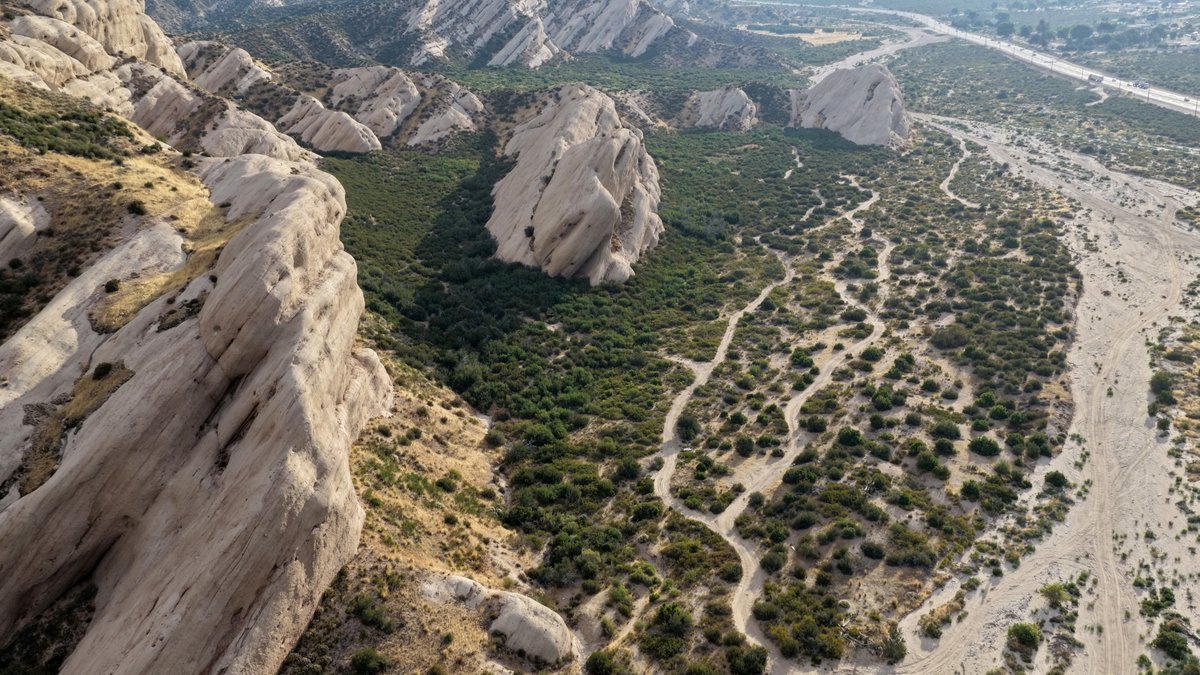
The San Andreas Fault is moving faster and storing more stress than scientists previously understood. Two independent research teams studying opposite ends of California’s fault system released findings this summer, indicating earthquake risks for the roughly 30 million people living within its rupture zones may exceed current models.
Northern Fault Slipping Faster Than Assumed
Geologist Kim Blisniuk of San José State University led a study revealing the Santa Cruz Mountains section of the northern San Andreas Fault is slipping at a rate that challenges long-standing assumptions about plate motion distribution in the Bay Area. Research conducted at Sanborn County Park near Saratoga used beryllium-10 cosmogenic nuclide dating to reconstruct the fault’s movement over the past 10,000 years—nearly ten times longer than most prior studies.
Earlier models suggested this section carried less strain as plate motion shifted to neighboring faults like the Calaveras or Hayward. Blisniuk’s data contradicts that assumption. The slip rate remains consistent over the 10,000-year record, meaning stress may accumulate and release more frequently than previously thought.
Related: Legacy stuns Falcons again to reach CS2 semis
The U.S. Geological Survey did not comment on the unpublished research. The team will present the findings at a conference in October.
Southern Stress Levels at Historic Highs
Dr. Liliane Burkhard of the University of Bern led a separate study showing tectonic stress along the southern San Andreas and San Jacinto fault systems has reached levels unseen in the past 1,000 years. Published in June in the Journal of Geophysical Research: Solid Earth, the model simulates a millennium of earthquake history. It identifies Cajon Pass northeast of Los Angeles as a potential flashpoint for multi-fault ruptures.
Cajon Pass, where the faults lie within roughly 1.5 kilometers of each other, functions as an area where ruptures could potentially jump between faults. The 1812 Wrightwood earthquake began on the San Jacinto Fault before jumping to the San Andreas. A similar event today could produce shaking affecting Los Angeles, San Bernardino, Riverside, and the Coachella Valley.
Burkhard emphasized the study does not predict an imminent earthquake.
Related: AI Reduces Game Development Teams to Solo Creators
The studies, though focused on different sections, present a consistent picture: the San Andreas is under more strain than previously recognized. Blisniuk’s northern data suggests the fault may be moving faster than models assumed, while Burkhard’s southern analysis shows stress at historic highs. Neither group claims to know when the next major rupture will occur, but both highlight the need for updated risk assessments.
The USGS ShakeOut scenario, published in 2008, estimated a magnitude-7.8 earthquake on the southern section could cause 1,800 deaths and $213 billion in damage. The last major earthquake on the southern San Andreas occurred in 1857, and the fault has been accumulating stress since then.
State officials continue to urge preparedness. The California Governor’s Office of Emergency Services recommends securing heavy furniture, storing at least three days’ worth of water and food, and knowing how to shut off gas lines. Residents can check their proximity to active faults using the California Geological Survey’s Alquist-Priolo Earthquake Fault Zone maps, available online through the state’s EQ Zapp portal.