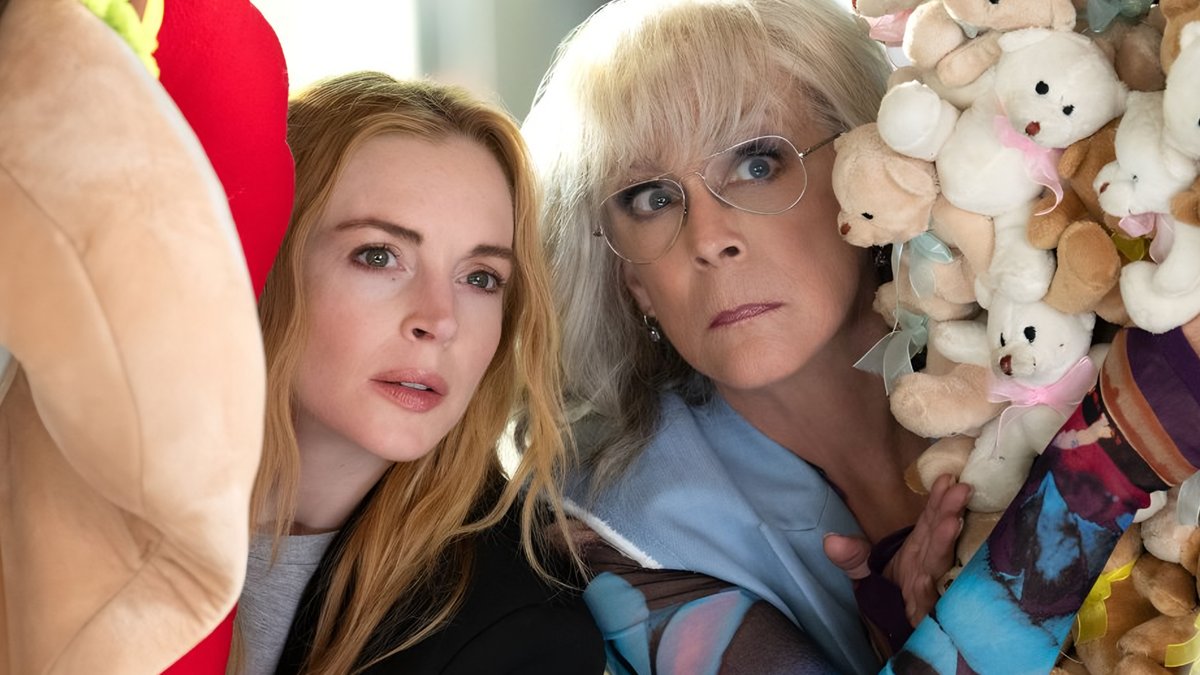
Freakier Friday hit theaters on Aug. 8, 2025, and quickly became a talking point for more than its box‑office numbers. The Disney sequel earned about $153 million on a $45 million budget and holds a 91% audience rating on Rotten Tomatoes, but the film’s premise—four people swapping bodies across generations—has scientists raising eyebrows.
What neuroscience says about moving a mind
The first hurdle is defining what would actually need to be moved. Philosopher David Chalmers coined the “Hard Problem of Consciousness” in the mid‑1990s, pointing out that we can map neural activity yet still lack an explanation for why that activity feels like anything at all. Without a clear answer, any notion of transferring subjective experience remains speculative.
Two leading theories try to pin down consciousness. Integrated Information Theory, proposed by Giulio Tononi and Christof Koch, quantifies consciousness with a metric called Φ. A brain’s Φ depends on its exact causal architecture, meaning two different brains cannot simply exchange software without replicating that architecture down to the last connection.
Related: San Andreas Fault movement accelerates unexpectedly
Why swapping an adult mind into a teen brain is especially tough
Adolescent brains are not miniature adult brains. During the teen years, the prefrontal cortex undergoes massive synaptic pruning, shedding up to 50 % of connections in some areas. This remodeling reshapes executive functions such as planning and impulse control, which are core to an adult’s mental habits.
At the same time, the limbic system matures earlier, creating a mismatch where emotions and reward processing run ahead of rational control. Dopamine levels spike, making teens especially sensitive to novelty and social feedback. An adult mind accustomed to a steadier dopamine environment would find the neurochemical storm unsettling.
Embodied cognition adds another layer. The brain constantly receives signals from the body—heartbeat, gut activity, posture—that shape perception. A consciousness transplanted into a body of different height, muscle memory, and hormonal baseline would receive an unfamiliar stream of somatic data, altering the very way it experiences the world.
Related: Chinese Users Rent Faces to AI Companies
The challenges are not merely technical; they are conceptual. Even if we could map every connection, we still lack proof that the connectome alone carries consciousness.
Given these obstacles, some cautious speculation is warranted. If future advances allowed precise reconstruction of both wiring and chemical state, an adult mind might at least approximate its original patterns in a teenage brain. Yet the ongoing development of that brain would likely reshape those patterns over time, leading to a hybrid identity rather than a clean transfer.
Philosophical puzzles beyond the science
Philosopher Derek Parfit argued that personal identity hinges on psychological continuity, not strict bodily or material sameness. His “teletransportation paradox” asks whether a perfect copy is truly the same person. Applied to a four‑way swap, the question becomes whether the individuals who return to their original bodies are the same as those who left, given the new memories and bodily experiences they acquired.
Related: India’s data center boom sparks local backlash
In practice, the film resolves the swaps with a feel‑good reunion, but the academic debate remains open. The brain’s plasticity suggests that even after a temporary occupation, the host brain will retain traces of the foreign consciousness, potentially altering future behavior.
In short, while Freakier Friday delivers entertainment, the science it leans on is far from feasible. The Hard Problem of Consciousness, the immense scale of the human connectome, and the unique developmental state of teenage brains all point to a gap that current technology, including advanced neural implants, cannot bridge.