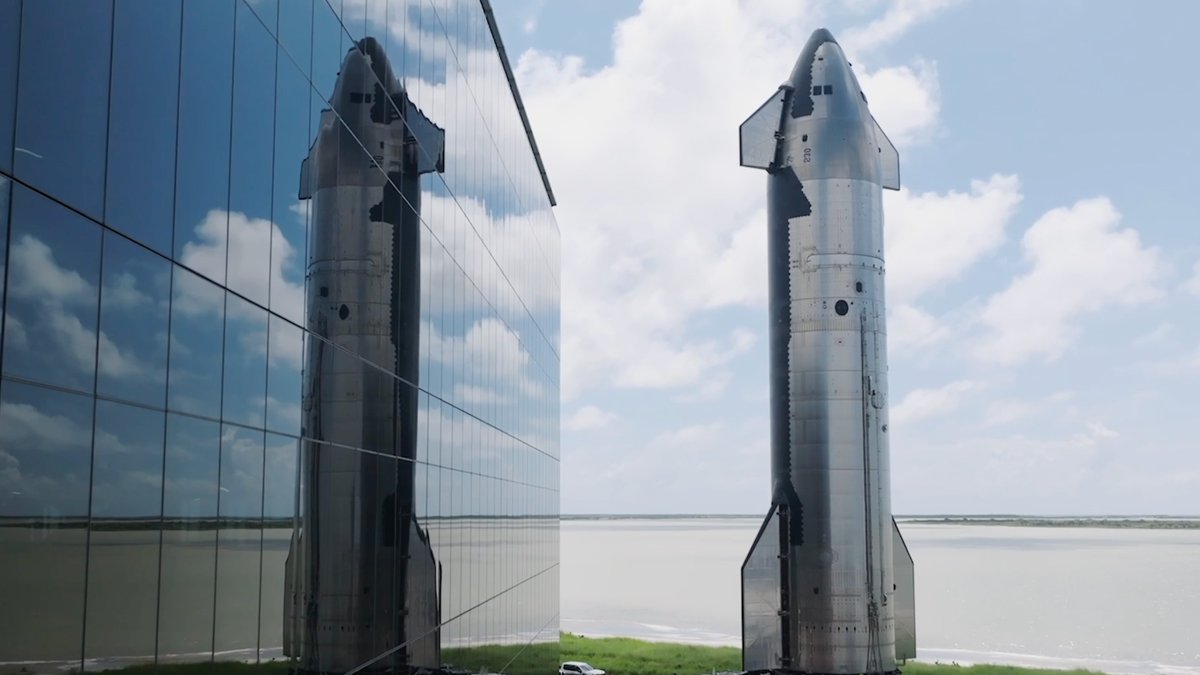
SpaceX announced a $100 billion investment to develop Starbase Louisiana on Pecan Island, a 125,000‑acre coastal site 50 miles southwest of Lafayette. The move targets a launch corridor that can feed a sun‑synchronous orbit needed for the company’s AI‑satellite program.
Orbital Geometry Drives Site Choice
The location offers an unobstructed southward path over the Gulf of Mexico, allowing rockets to reach a 97°–98° inclination without costly plane‑change burns. Launches from the east coast, such as at Cape Canaveral, are limited to 28.5° inclinations, making the Gulf route uniquely efficient.
A sun‑synchronous orbit keeps a satellite in near‑constant sunlight, a condition essential for solar‑powered platforms. The trajectory from the site aligns with the orbital plane that precesses about one degree per day, ensuring each pass occurs at the same local solar time.
Analyst Adam Jonas noted the geometry “allows expansion into dawn‑dusk sun‑synchronous polar orbits directly relevant for orbital compute.” The comment reflects market interest in the high‑cadence launch capability the site promises.
Related: Caltech firm debuts AI without transformer tech
Infrastructure and Launch Ambitions
The program called Starmind will field AI compute hardware on low‑Earth orbit satellites. Each AI1 unit carries solar arrays up to 150 kilowatts, powering Nvidia Vera Rubin GPUs that process data before beaming results via the Starlink laser network.
Because the satellites rely solely on sunlight, minimizing eclipse time directly raises compute duty cycles. In a standard 28° orbit, eclipses would cut power, whereas a 500‑800 kilometer sun‑synchronous path offers near‑continuous illumination.
Compared with terrestrial data centers, orbital compute could avoid cooling water and benefit from uninterrupted solar input. That advantage, however, hinges on the launch system’s ability to turn around flights rapidly.
The construction plan includes five launch complexes, each with two pads and a dedicated propellant farm, totaling ten pads—more than the three currently active at the company’s other sites. On‑site methane production will draw from the state’s abundant natural gas, supporting the liquid‑methane/liquid‑oxygen propellant needed for the vehicle.
Target capacity envisions over 30 launches per day once fully built, a rate that demands full rapid reusability of both booster and upper stage. The current record shows booster catches with mechanical arms, but the upper stage has yet to be recovered at the launch tower.
Related: Legacy stuns Falcons again to reach CS2 semis
Investors see the cadence as a valuation driver. One analyst set a price target of $300 per share, implying a market cap near $8 trillion if the launch rhythm materializes. The bullish case rests on the assumption that orbital AI compute will soon outpace terrestrial costs.
Environmental and Community Response
Opposition groups have raised concerns about the wetland habitat that supports more than 300 bird species, including the critically endangered whooping crane. Formal comments to the FAA cite potential waivers of federal wildlife and water protections.
Local residents say they were left out of the decision‑making process. One longtime inhabitant expressed a desire for “peace and quiet,” while another displayed a sign reading “Paradise Lost” at the announcement event.
The agency’s review must conclude before construction can start in 2027, with the first launch slated for as early as 2029. The company says large portions of the parcel will remain undeveloped wetland and that it will work with conservation groups to mitigate impacts.