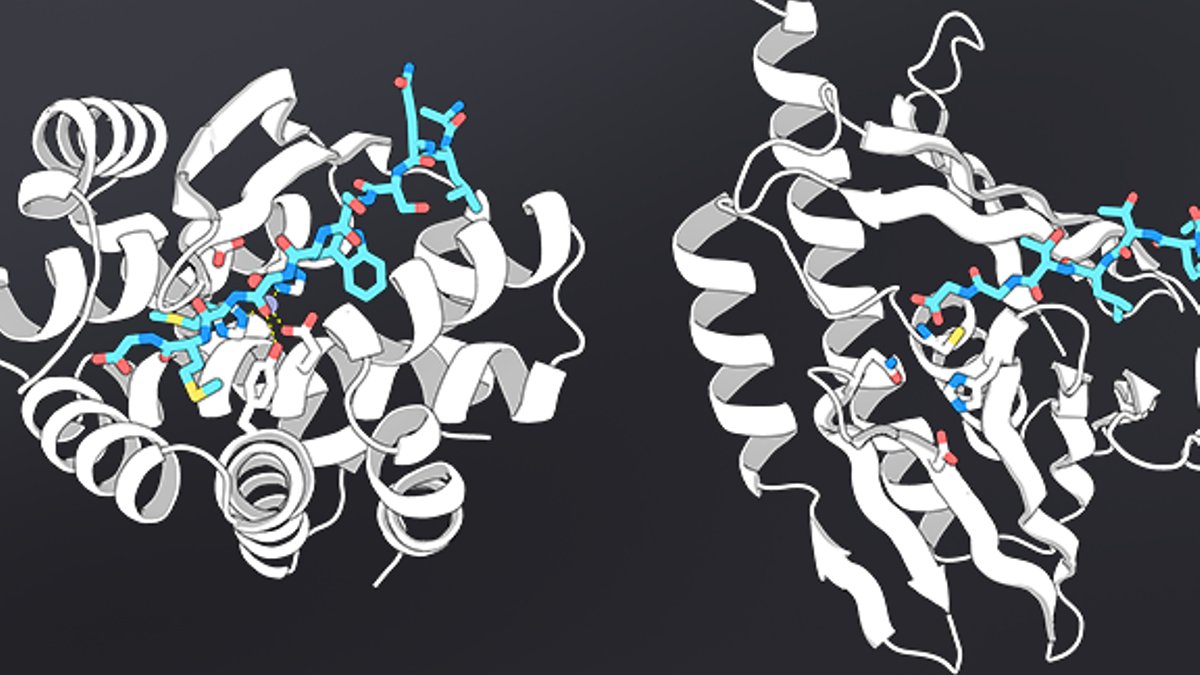
The University of Washington Medicine Institute for Protein Design (IPD) has launched its first AI protein model built in collaboration with Nvidia, marking a new phase in computational biology. The open-source tool, called RFD4-Proteina, is designed to generate proteins with precise functions, leveraging deep learning techniques the institute has refined over years.
The release follows a major expansion in computing resources. Earlier this month, IPD announced a grant of GPU power from Nvidia CEO Jensen Huang and his wife, Lori Huang, through their foundation. The institute has also been using cloud-based GPUs from CoreWeave since June, with the combined resources expected to support research for at least a year.
David Baker, IPD’s director and a 2024 Nobel laureate in chemistry, called the grant “transformational” in accelerating the team’s work. The new model builds on IPD’s previous tools, including RoseTTAFold for protein structure prediction and RFdiffusion (RFD) for protein design. The name RFD4-Proteina reflects its ties to both RFD and Nvidia’s Proteina-Complexa computational frameworks.
Read Also: Ugreen NAS HDMI Port Enables Media Playback and System Control
The model is positioned as a significant advance over earlier methods, delivering faster performance while requiring far less computational power. Researchers say it could enable the creation of proteins never before imagined—potential breakthroughs in drug development, environmental cleanup, and materials science. IPD has already spun out 11 companies using its technologies, including vaccine developer Icosavax and protein-design startup Archon Biosciences.
Early testing by Seth Woodbury, a UW bioengineering predoctoral candidate, demonstrated its speed. Using the model, his team designed a pesticide-degrading enzyme in days that outperformed their previous best effort, which took months. Woodbury previously published enzyme research in Nature.
The development team included UW doctoral students Nathaniel Corley, Maxwell Kazman, and Rafi Brent, along with Kieran Didi, a visiting student from Oxford. The model is now available through the Berkeley Software Distribution.