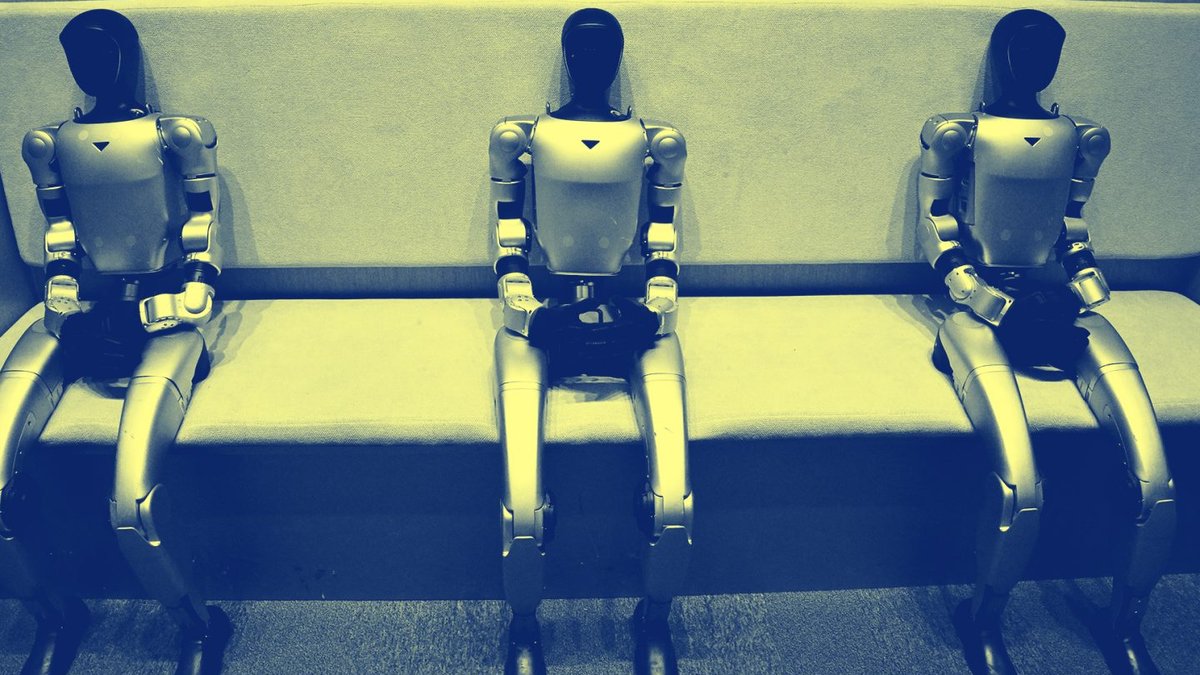
The U.S. government is forcing a rapid onshoring of robotics through a sweeping ban on foreign-made robots, even before an American supply chain exists, putting at risk the very robotics startups the policy is trying to cultivate.
The Federal Communications Commission last month added “advanced robotic devices” to its list of banned devices that pose national security risks.
Under the rule, new models of foreign-made humanoids, quadrupeds, and even robot vacuums as well as lawn mowers will be banned from the American market.
Requirements for Entry
To qualify for entry, a robot needs to be assembled in the U.S. and must have at least 65% of its components by value produced domestically.
The required share of domestic parts will rise to 75% in 2029.
The ban is not targeted at any single country, but is widely seen as aimed at China, which dominates robotics manufacturing.
Impact on Startups
Startup founders struggle to see how they can manufacture commercial robots without China’s electronics supply chain.
“Look at Apple, it’s made in China. How do you expect even more complicated products like robots to be built in America?” Anto Patrex, founder of CosmicBrain AI in San Francisco, said.
Patrex’s company aims to make robots that fetch deliveries and carry laundry in apartment buildings.
Related: Electric cars prices drop globally except US
Like most robotics entrepreneurs in the Bay Area, he experimented with Chinese robots and had his first products assembled in China.
In early 2026, sensing growing U.S. scrutiny of Chinese robots, Patrex set up an additional assembly facility in Canada, with key components coming from China, meaning these robots wouldn’t qualify for sale in the U.S. under the latest FCC rule.
Security Concerns
American robotics entrepreneurs said they shared the security concerns about Chinese products, but that it would be difficult to meet the stringent made-in-America requirements.
Many robotics components are too expensive, too slow to procure, or completely unavailable in the U.S.
Employees at Silicon Valley companies had even flown from China to the U.S. with robot parts in their suitcases, according to the report.
Michael Perry, head of commercial strategy at Persona AI, a Houston-based startup that is developing industrial humanoid robots, said even before the FCC ban, U.S. clients had been requesting robots with no Chinese components for security reasons.
Perry said Persona AI had been sourcing parts from Taiwan, Japan, South Korea, and Italy.
But they still need to work toward satisfying the latest FCC rule requiring 65% made-in-American components, Perry said.
“You need to provide the carrot as well as the stick,” Perry said.
Related: Google may reverse Watch Unlock on Pixel
The U.S. government should be doing more to grow the domestic supply chains, he added.
Right now, the government is only providing the stick, Perry said, referring to the ban on foreign-made robots.
Some robot makers have welcomed the import ban, hoping it will protect them from cheaper Chinese competition in the long run.
Agility Robotics, which assembles its warehouse robots in Oregon, said in a statement that the FCC rule was an important step toward addressing the national and economic security concerns posed by foreign robots.
Antonio Li, founder of San Francisco-based Nori Robotics, said the company mostly uses motors and actuators made in Asia, but expects the FCC rule to spur the growth of American suppliers.
Although the FCC ban could “raise some complications with the supply chain,” it is also drawing researchers and customers toward American robot makers, Li said.
“The new ban is going to force all the researchers and software-based companies to buy U.S. instead,” Li said.
“For us, it’s no doubt a positive thing,” Li added.
They are looking to Communities Seek Control over their personal data in the development of robots.