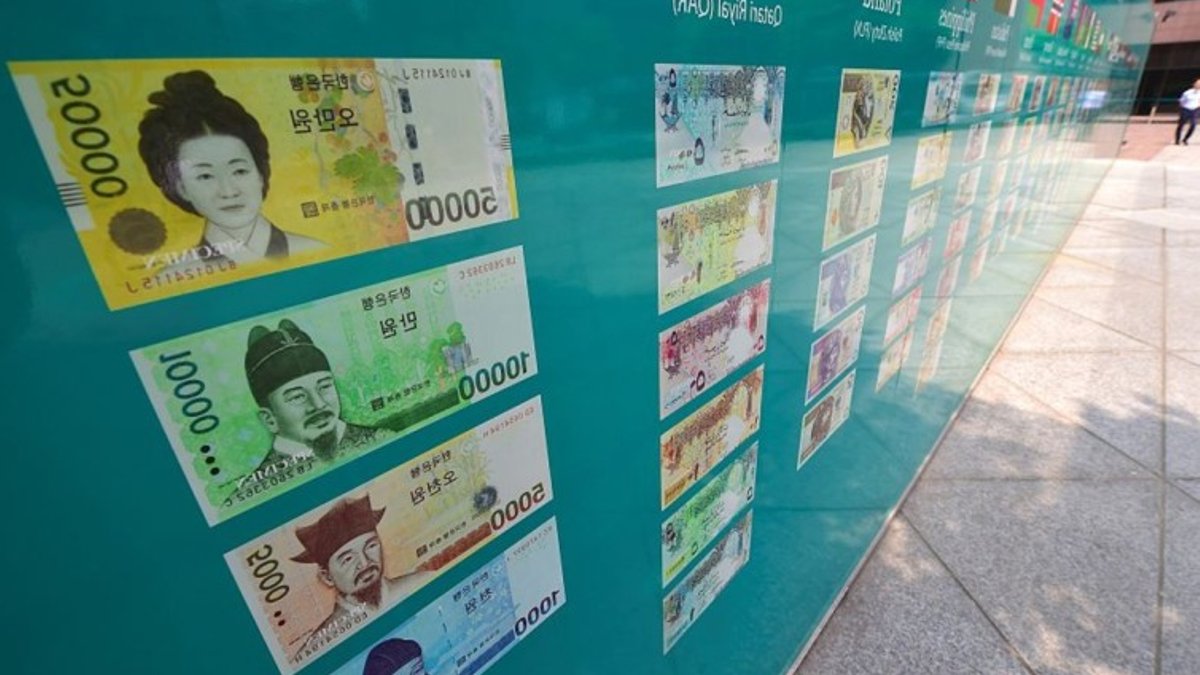
South Korea’s largest independent asset manager, Shinhan Asset Management, has signed a four-way pact with the Solana Foundation, Etherfuse, and Orca to pilot a Korean won-denominated tokenized fund. This move directly challenges the near-total dollar dominance of the $36 billion real-world asset tokenization market.
The pilot aims to bring non-US-dollar institutional capital onto a public blockchain, with Shinhan Asset Management testing whether the architecture works when the underlying asset is denominated in a currency with no meaningful onchain liquidity infrastructure.
The Solana Foundation supplies the public ledger and compliance primitives, while Etherfuse handles the tokenization issuance layer. Orca designs the onchain liquidity architecture, which is essential for the pilot’s success.
Shinhan Asset Management manages the investment portfolio and handles domestic regulatory compliance. They are attempting to apply the BUIDL distribution architecture to a won-denominated ultra-short-term bond fund, with overseas institutional investors as the intended holders.
The BUIDL model’s key insight is structural: fund ownership is recorded on a public, permissionless blockchain, with whitelisted wallets tied to verified identities. However, the model works with elegance partly because the U.S. dollar is the world’s reserve currency, and USDC and USDT stablecoin pools on Solana are billions of dollars deep.
In contrast, the Korean won complicates the model at precisely the point where BUIDL had it easiest: liquidity. Orca‘s role is not simply to deploy a pool but to design a liquidity bootstrapping strategy for a market that has never existed.
This is novel work, and it is the reason the MOU required an onchain liquidity specialist as the fourth party rather than treating liquidity as an afterthought.
The non-stablecoin RWA market has grown significantly since 2020. Every major institutional product currently anchoring that market invests in U.S. dollar instruments and targets investors comfortable operating in the dollar ecosystem.
Related: Barkour sets 2026 release with new Gamescom demo
A KRW-denominated ultra-short bond fund in tokenized form, if it achieves functional onchain liquidity, would give overseas Korean institutional investors something the current market does not: a KRW-yield instrument that is as easy to hold, transfer, and exit as a USDC balance.
The Solana ecosystem is designed to optimize around dollar-denominated assets, which creates a challenge for the KRW-denominated fund token. Orca must attract professional market makers willing to hold KRW token exposure on one side of a pool and USDC on the other, similar to how Indian EV makers outpace Tesla, BYD in efficiency.
If the pilot is successful, a similar architecture could apply to the Japanese yen, the Singapore dollar, the Indian rupee, and every other Asian currency with institutional fixed-income markets, which could lead to Bitcoin investors snapping up opportunities ahead of Jackson Hole.
One of the key challenges is the onchain liquidity problem for a KRW-denominated token. Almost all DeFi liquidity on Solana is built around the U.S. dollar, specifically USDC and USDT stablecoins.
Orca‘s permissioned Whirlpool pools add a second enforcement layer, only allowing wallets holding a verified Civic Pass to provide liquidity or trade in those pools.
The Solana ecosystem’s ability to support a KRW-denominated tokenized fund will depend on the development of a functional liquidity market.
Shinhan Asset Management is simultaneously testing a parallel architecture with Plume, a different RWA-focused blockchain network. This suggests that they are engaged in genuine infrastructure comparison rather than a single-vendor commitment.